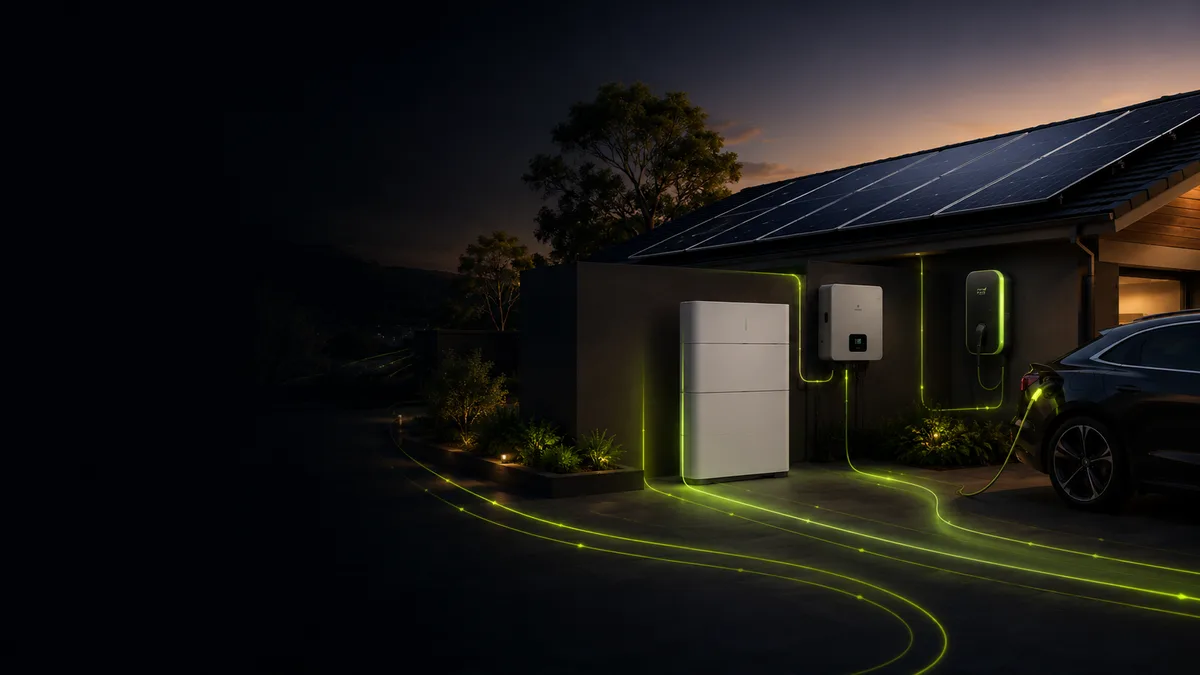
Track Energy supplies and installs EV chargers designed to work alongside solar and battery systems, so South Australians can charge smarter, cheaper and more conveniently.
As more South Australian households and businesses move to electric vehicles, reliable home and workplace charging is becoming as essential as a garage power point was a generation ago.
A dedicated EV charger is faster, smarter and more efficient than plugging into a standard outlet. When combined with your solar system, you can charge your vehicle directly from sunlight, reducing your fuel costs significantly and making the most of your solar investment.
Solar plus EV charging: Charging from solar during the day can cost as little as $0 per kWh versus paying grid rates of $0.35 to $0.45/kWh overnight. Over a year, this saves the average EV driver $800 to $1,500 in charging costs alone.
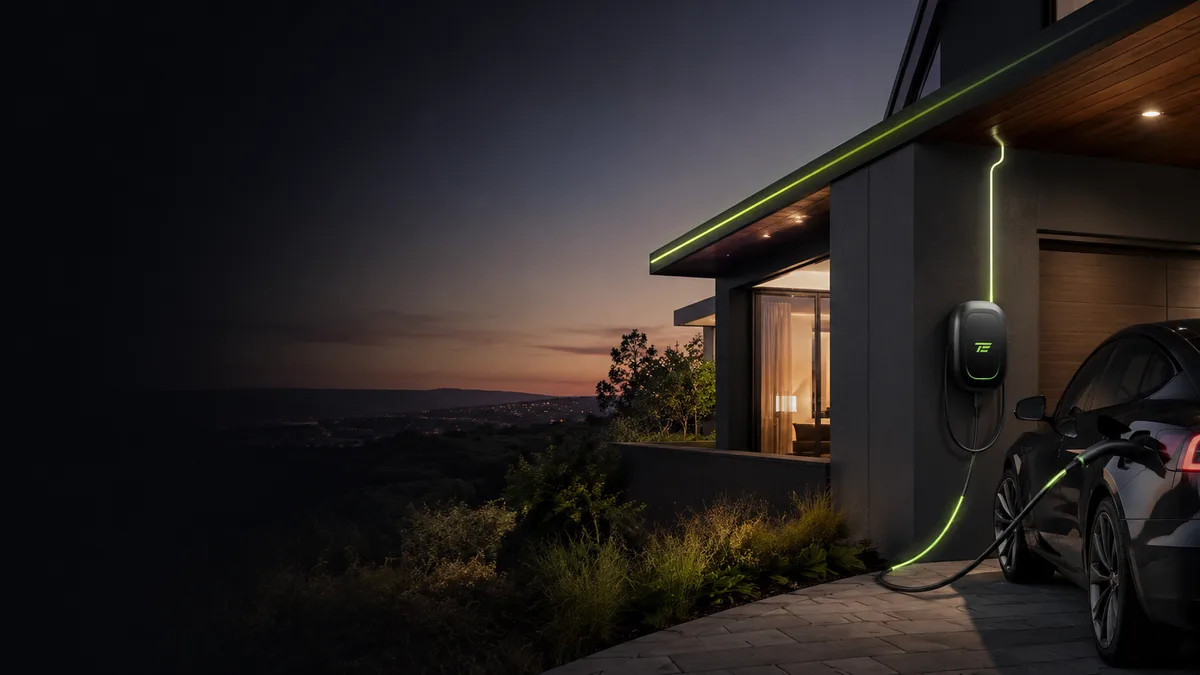
EV charger output is measured in kilowatts (kW). More kW means more kilometres of range added per hour. Here is how the common options compare for home and business use.
Integrating your EV charger with your solar system is one of the most financially effective things you can do with solar generation. Instead of exporting excess solar at low feed-in rates, you use it to fill your car battery at near-zero cost.
Use excess solar generation to charge your vehicle during the day
Smart chargers detect available solar and adjust charge rate automatically
Reduce reliance on grid electricity for both home and transport
Combine with battery storage for overnight solar-powered charging
Some systems allow vehicle-to-home discharge, using your car as a backup battery
App control allows scheduling charges to coincide with solar peaks or off-peak tariffs
A dedicated home charger is the most convenient way to keep your EV charged, with your car fully ready every morning. Track Energy assesses your electrical panel, preferred charging location and solar system before recommending the right charger and installation approach.
Wake up to a fully charged vehicle every morning
Faster and more efficient than a standard 10A outlet
Solar integration reduces charging cost to near zero
Clean, professional cable management and mounting
Smart scheduling for off-peak and solar-optimised charging
CEC-accredited electrical installation to Australian standards
EV charging for staff, customers and fleet vehicles is fast becoming a competitive differentiator for South Australian businesses. Track Energy can design and install multi-charger solutions integrated with existing solar and battery infrastructure.
Staff charging as a workplace benefit
Customer-facing chargers to attract foot traffic
Fleet vehicle overnight charging infrastructure
Load balancing across multiple chargers
Solar and battery integration to reduce operating costs
Scalable installation, start with one charger and expand later
Yes. A dedicated circuit is required for a Level 2 home EV charger, installed by a licensed electrician. Track Energy handles the full electrical installation including the dedicated circuit, appropriate protection devices and charger mounting.
Most modern switchboards can accommodate an EV charger with minor modifications. Older switchboards may require an upgrade. Track Energy will assess your switchboard capacity as part of the site evaluation at no extra cost.
Yes, with the right charger and inverter setup. Some EV chargers can communicate with your solar inverter and automatically adjust the charge rate to match available solar generation. This maximises solar self-consumption and minimises grid purchases.
Single-phase chargers (7kW) are standard for most Australian homes and suit daily top-up charging. Three-phase chargers (11 to 22kW) require a three-phase electrical supply and deliver faster charging, more relevant for commercial sites or homes already on three-phase power.
A typical home EV charger and installation in South Australia costs $1,200 to $2,500 depending on the charger model, installation complexity and distance from the switchboard. Track Energy will provide a fixed-price quote based on a site assessment.