Store more of the energy you generate.

Track Energy supplies and installs battery energy storage systems that let South Australian homes and businesses use more of their own solar power, day and night.

Est. 2012
Established
2,000+
Installations State Wide
SA Owned
South Australian Operated
Since 2009
Founder Industry Experience
350k
Batteries installed in Australia under the federal program
7yr
Typical battery payback period (5 to 10 year range depending on usage)
10kWh+
Common residential battery capacity
90%
Self-consumption achievable with solar plus battery storage

Make your solar work around the clock.

Without a battery, solar energy not used immediately is exported to the grid, often at a low feed-in tariff. A battery captures that energy and stores it for use when you need it most: evenings, cloudy periods and peak tariff times.

Australia added over 350,000 home and business batteries in the first 10 months of the federal government $2.3 billion Cheaper Home Batteries Program, which commenced July 2025. This has significantly reduced battery costs, making storage more accessible than ever before.

Federal incentive: The Cheaper Home Batteries Program provides subsidised battery installations for eligible households. Track Energy can advise on current eligibility and rebate availability in South Australia.
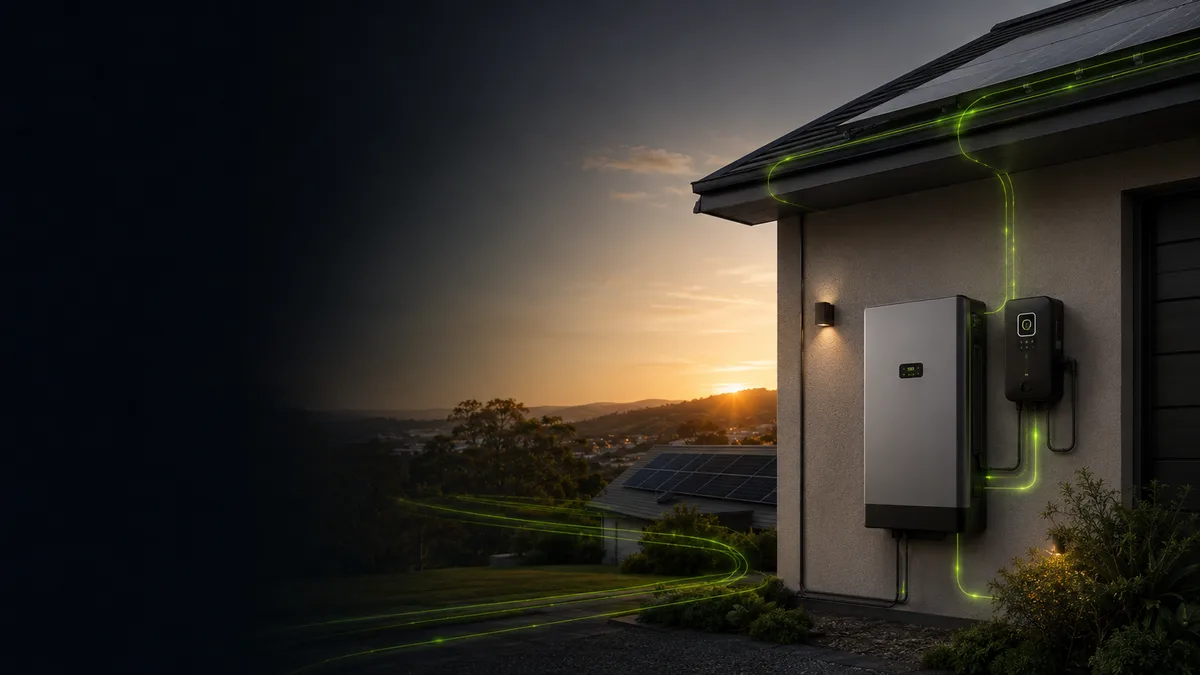

Home battery storage system

How a home battery system works.

Solar Generates
During the day, your solar panels generate more electricity than your home typically uses.
Battery Charges
Excess solar energy charges the battery instead of being exported to the grid at a low feed-in rate.
Power Your Evening
When the sun goes down, the battery powers your home, lights, appliances, hot water and more.
Track and Control
App-based monitoring lets you see stored energy, consumption and savings in real time.

Is a battery the right fit for your site?

Battery storage is a significant investment and not right for every site. Track Energy provides practical advice so you can make an informed decision before committing.

A battery is likely a good fit if:

You have significant evening electricity usage after solar generation stops

Your electricity tariff has high peak rates or time-of-use pricing

You have or plan to install a reasonably sized solar system (6.6kW+)

Backup power during grid outages is important to your household or business

You have an EV or plan to get one and want to charge cheaply overnight

Your feed-in tariff is low and self-consumption is more financially beneficial

What Track Energy assesses:

Daily usage split between day and evening consumption

Existing or proposed solar system size and expected generation

Current tariff structure and feed-in rate

Whether backup power functionality is required

Available installation space, garage, utility room or outdoors

Budget and expected payback period

Future EV charging and load requirements

Key battery specifications explained.

Battery marketing can be confusing. Here is what the key specifications actually mean for your home or business.

Storage Capacity
5–20 kWh
How much energy the battery can store. A typical SA home uses 15 to 25 kWh per day. A 10kWh battery covers around 40 to 60% of evening needs.
Continuous Power
3–8 kW
How much power the battery can deliver at once. Higher power (5kW+) supports air conditioning and other high-draw appliances simultaneously.
Round-trip Efficiency
~95%
How much of the energy stored can be retrieved. The best lithium batteries achieve 95%+ efficiency, meaning very little energy is lost in storage.
Cycle Life
6,000+
How many charge and discharge cycles the battery is rated for. At one cycle per day, 6,000 cycles equals over 16 years of daily use.
Backup Capability
Optional
Some battery systems can maintain power to the home during grid outages. This requires specific inverter and battery combinations. Track Energy can advise.
Chemistry
LFP
Most modern residential batteries use lithium iron phosphate (LFP) chemistry, safer, longer-lasting and more stable than older lithium-ion technologies.

Battery systems from established manufacturers.

Track Energy works with selected battery brands known for reliability, warranty support and compatibility with our inverter range. We recommend the right battery based on your system, site and requirements.

FOXESS
Alpha ESS
Deye
Sungrow
Sigenergy
80 to 95%
Solar self-consumption achievable with battery storage
Compared to 25 to 40% self-consumption for solar-only systems in typical households

Why battery storage is becoming the standard.

A solar-only system feeds most of its generation back to the grid during the day at low feed-in rates, then buys power back at full price in the evening. A battery captures that generation and uses it when it matters most.

Use more of your own solar and reduce grid dependency

Cut evening electricity bills significantly

Protect against time-of-use peak tariffs

Back up critical loads during grid outages where system supports it

Future-proof your home for EV charging integration

Common battery storage questions.

Battery costs have reduced significantly in Australia, particularly since the federal Cheaper Home Batteries Program started in July 2025. A 10kWh residential battery system typically costs $8,000 to $14,000 installed, depending on brand, capacity and integration requirements. Rebates can reduce this further. Track Energy will provide a current, site-specific quote.

Quality lithium iron phosphate batteries used in residential systems are rated for 6,000+ charge cycles. At one cycle per day, this equates to over 16 years of daily use. Most batteries come with a 10-year manufacturer warranty on capacity retention.

In many cases, yes. Compatibility depends on the existing inverter model, system design and available switchboard space. Many modern inverters are hybrid-ready and can accept a battery without replacement. Track Energy will assess your existing system before recommending a solution.

This depends on the battery and inverter combination. Not all battery systems include blackout protection as standard. Systems from brands like FOXESS, Alpha ESS and Sungrow offer backup capability with the right configuration. Track Energy can recommend backup-capable combinations if this is important to you.

The Australian federal government $2.3 billion Cheaper Home Batteries Program, which commenced July 2025, provides subsidies for eligible battery installations for households, small businesses and community organisations. Over 350,000 batteries were installed in the first 10 months. Track Energy can advise on current eligibility and available incentives.

Find out if battery storage is right for your home or business.

Speak with Track Energy for a practical assessment of whether battery storage makes financial and operational sense for your specific situation.