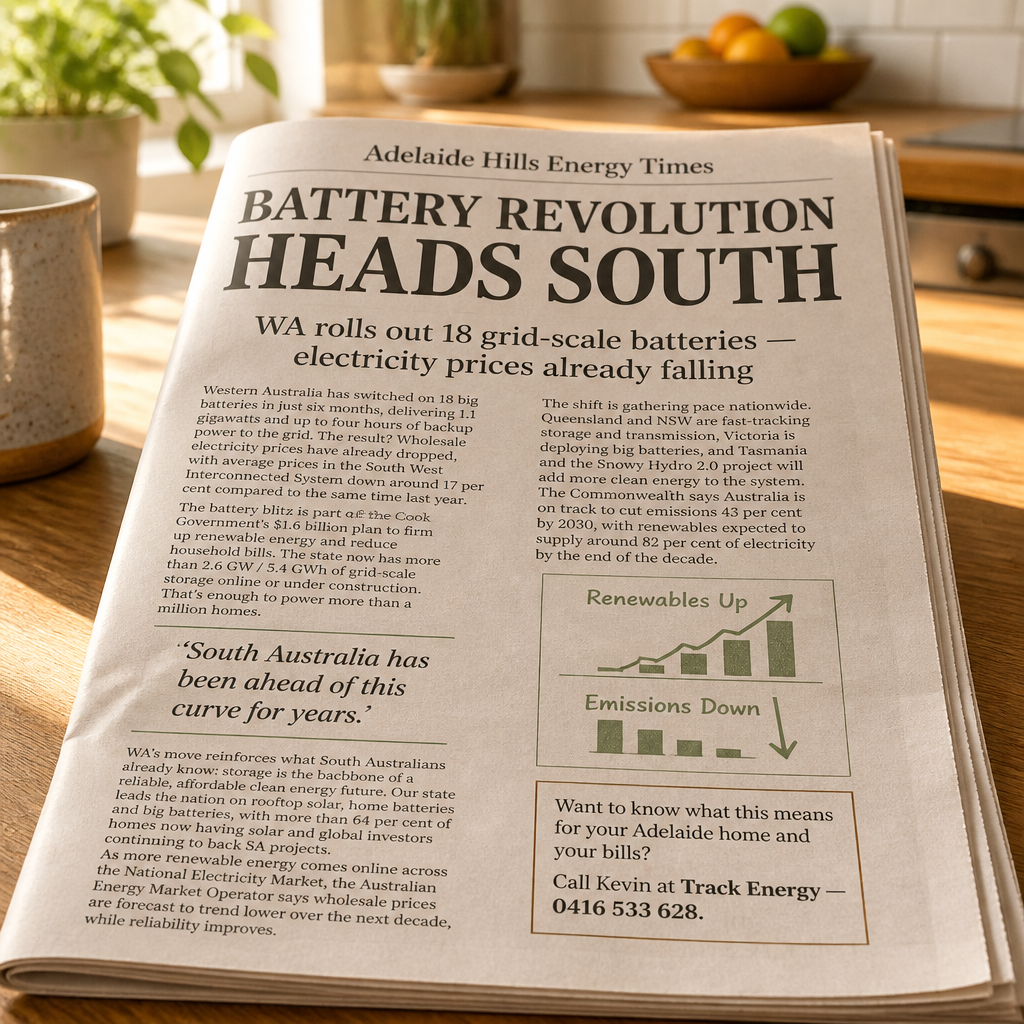
Something significant is happening across Australia's energy landscape right now, and if you own a home in Adelaide, it is worth paying attention. Western Australia is in the middle of rolling out 18 new grid scale battery systems, and electricity prices there are already starting to ease as solar and battery uptake grows across the region. At the same time, national data is showing renewables up and emissions down. The direction of travel is clear, and South Australia has been ahead of it for years.
What Is Happening Nationally With Renewables
Federal Energy Minister Chris Bowen recently shared an update confirming that renewable energy generation and electric vehicle sales are both trending upward nationally, while emissions are falling. These are not aspirational targets. This is the transition already underway.
The WA battery rollout is a practical, real world example of grid scale storage being deployed to support that transition. Eighteen new systems being added to one state's grid is not a small thing. It reflects a recognition that solar generation alone is not enough. Storage is what makes the whole system work, at both a grid level and at a household level.
South Australia has understood this for longer than most. Our grid has carried more renewable energy as a share of generation than anywhere else in the country for years, and the infrastructure and policy environment here reflects that. For Adelaide homeowners, that context matters.
Why South Australia Is Already Ahead of the Curve
South Australia's energy story is one of early adoption. We moved into renewable generation faster than other states, and we lived through the growing pains that came with it. Prices spiked, the grid was stressed, and there were moments where the transition looked rocky from the outside.
But the investments made here in grid scale storage, demand response programs, and household solar and battery incentives have paid off. The state that once made headlines for blackouts is now regularly running on very high shares of renewable generation with increasing stability.
What this means for a homeowner in Adelaide is that the infrastructure around you is already geared toward supporting households with solar and battery storage. Feed in arrangements, network rules, and virtual power plant programs have all matured here. If you are considering adding battery storage to an existing solar system, or looking at solar and battery together for the first time, the local environment is as supportive as it has ever been.
What Grid Scale Battery Storage Means for Your Home Bills
You might wonder what 18 large batteries in WA has to do with your Adelaide electricity bill. The connection is real, even if it is not immediate.
Grid scale storage reduces the cost of managing peak demand on the network. When large batteries can absorb excess solar generation during the day and release it during the evening peak, the grid operator does not need to fire up expensive gas peakers to cover the gap. Over time, that reduces wholesale price spikes, which flow through to retail tariffs.
We are already seeing early signs of this in WA as their solar and storage footprint grows. South Australia has been on this path for longer, and while electricity prices are still a real pressure for most households here, the trajectory is different to what it would have been without the renewable build out.
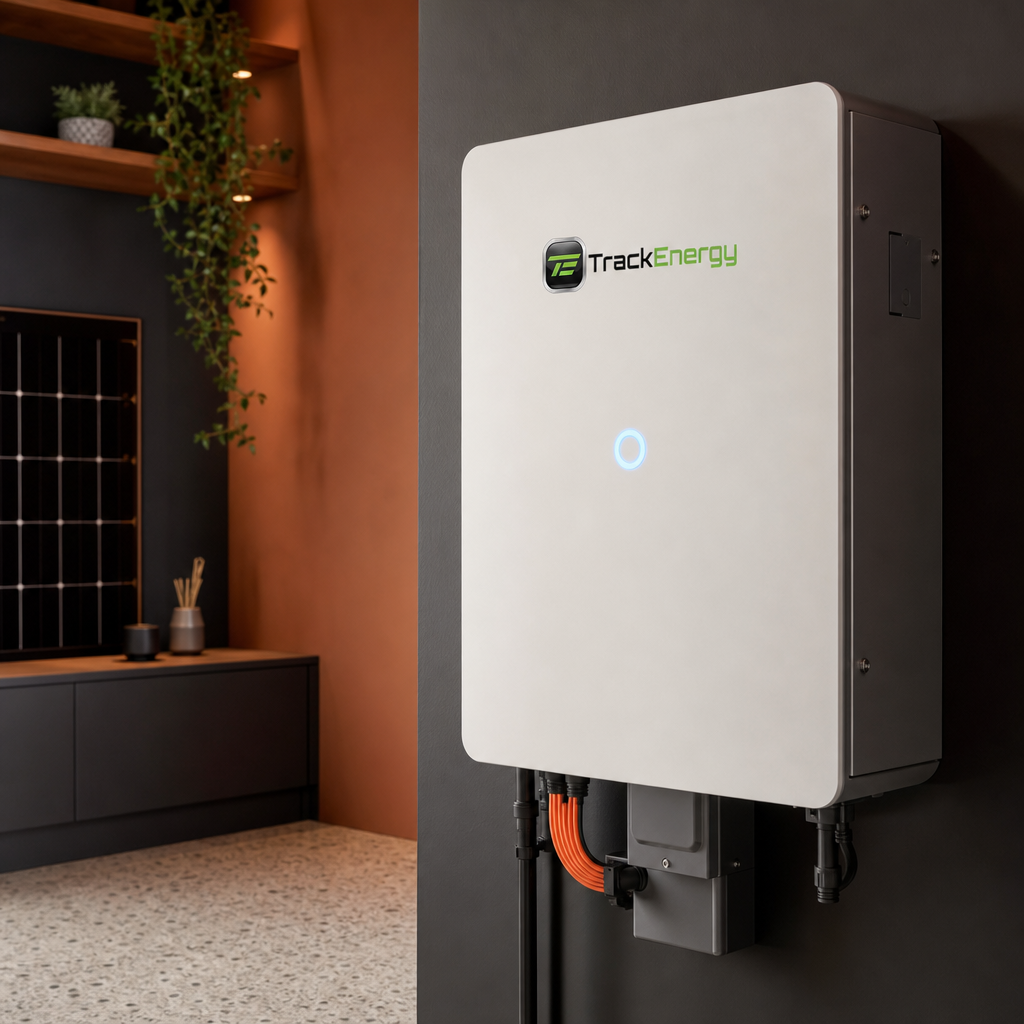
At a household level, adding a battery to your solar system accelerates your own version of this shift. Instead of exporting cheap daytime solar and buying expensive evening power back from the grid, a battery lets you store what your panels generate and use it when you actually need it. The arithmetic on that is straightforward for most homes running decent sized systems.
The Most Common Situation We See With Adelaide Homeowners
The most common situation we come across is households that installed solar several years ago, are getting very little value from their feed in tariff now that rates have dropped significantly from their earlier highs, and are wondering whether battery storage makes sense as a next step.
In most cases the answer depends on a few things: how much power you use during the evening, what tariff structure you are on, and whether your existing inverter and system are compatible with the battery options that suit your usage profile. There is no single answer that fits every home, which is why we always look at a customer's actual consumption data before recommending anything.
What we can say generally is that the economics of battery storage have improved considerably over the past few years, and the combination of rising grid electricity prices and falling battery costs has shifted the calculation for a lot of Adelaide households. If you have been sitting on the fence, it is worth at least having a proper look at the numbers for your specific situation.
What to Do If You Are Considering Battery Storage
The best starting point is a conversation. Not a hard sell, not a quote thrown at you before you have asked for one. Just a clear look at your current setup, your bills, and whether adding battery storage is likely to make a genuine difference for your household.
At Track Energy we have been doing this in Adelaide and the Adelaide Hills since 2009. We know the local grid, the local conditions, the local incentives, and the systems that have performed well in South Australian homes over the long term. That experience means we can give you an honest read on whether battery storage makes sense for you, rather than just telling you what you want to hear.
The national shift toward renewables is not slowing down. South Australia is already living proof of where the rest of the country is heading. If you want to make sure your household is positioned well for what comes next, now is a sensible time to take a proper look at your options.
Get a free solar quote from Track Energy. Visit trackenergy.com.au or call 0416 533 628