Battery storage is one of the most talked about topics in home energy right now, and for good reason. Australia has seen extraordinary uptake in recent months, with home battery installations accelerating faster than most industry watchers predicted. Yet for all the buzz, a lot of South Australian homeowners still feel a little uncertain about what a battery system actually does, how it fits into a solar setup, and whether it is the right move for their home.
That uncertainty is completely understandable. The concept sounds straightforward enough on the surface. You store energy and use it later. But once you start looking at specs, charge cycles, inverters and rate structures, it can get confusing fast. So let me walk you through how a home battery system actually works, from the moment the sun comes up to the moment you turn the lights off at night. No jargon, no sales pitch. Just a clear picture of what is happening inside your walls.
The Basic Concept. Shifting Energy From When You Have It to When You Need It
Solar panels generate electricity during daylight hours. That is straightforward. The challenge is that most households use the bulk of their energy in the morning and evening, not at midday when solar generation is at its peak. Without a battery, any solar energy you do not use the moment it is generated gets exported to the grid in exchange for a feed in tariff.
A battery changes that equation. Instead of exporting surplus solar energy, your system diverts it into the battery first. That stored energy then sits ready to power your home later in the day when solar generation drops off, such as late afternoon, evening and overnight. The result is that more of the electricity you generate actually gets used by your household, rather than sold back to the grid at a relatively low rate and then bought back at a much higher rate once the sun goes down.
That shift is the core value of battery storage. It is not magic. It is timing.
What Is Actually Happening Inside the System
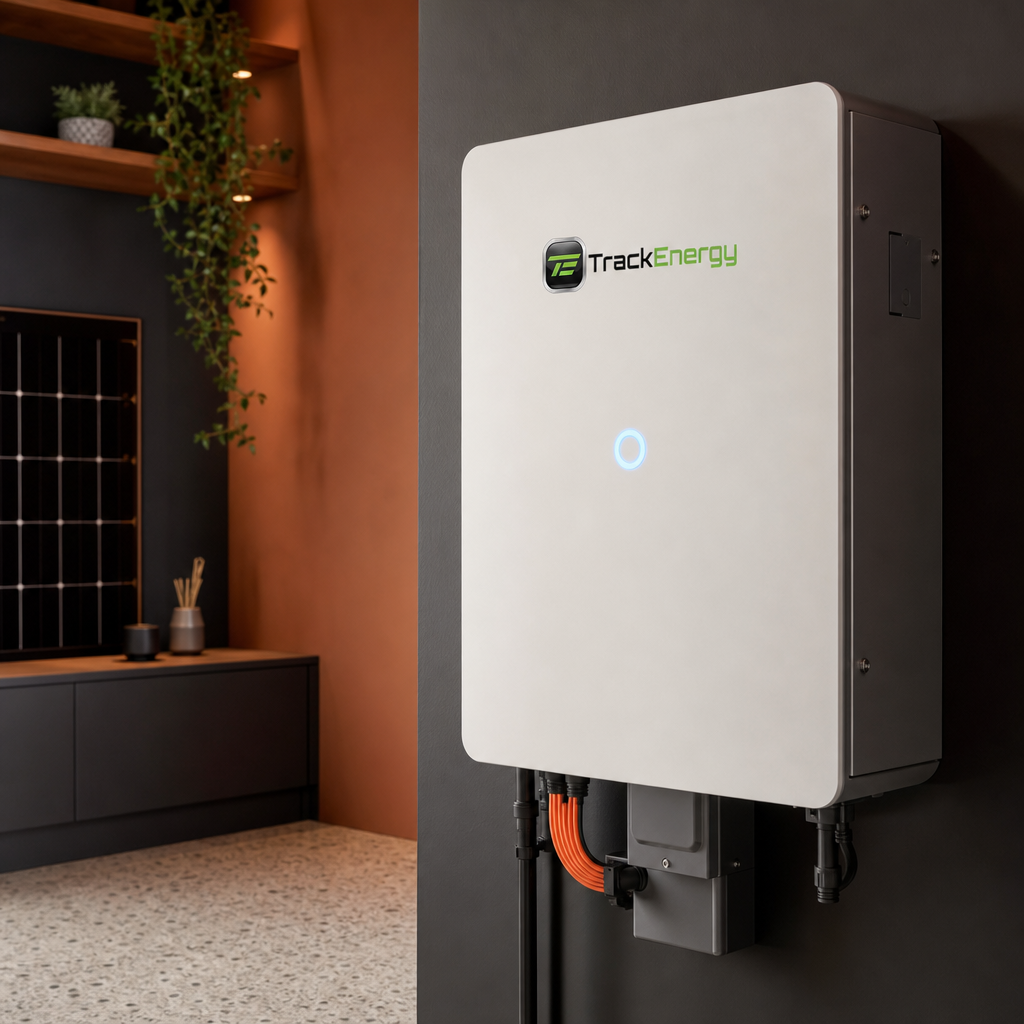
Most home battery systems installed today use lithium iron phosphate chemistry, often written as LFP. This chemistry is well suited to the daily charge and discharge cycles a home system goes through, and it has a strong safety record. The battery itself is just one part of the picture though.
Your system will also include an inverter, which is the device that converts energy between the direct current that solar panels produce and batteries store, and the alternating current that your home appliances run on. In some setups this is a hybrid inverter that handles both your solar panels and your battery in one unit. In others, a separate battery inverter is added alongside an existing solar inverter. The design that suits your home depends on what equipment you already have and what your energy goals are.
A battery management system sits inside the battery unit itself and monitors things like temperature, charge level and cell balance to keep everything operating safely and efficiently. You generally never interact with it directly. It just runs quietly in the background doing its job.
How the System Prioritises Energy During the Day
Once your solar and battery system is up and running, your inverter manages energy flow automatically according to a priority order that is usually set up during installation and can be adjusted through a monitoring app.
The typical priority order works like this. Solar generation powers your home's live loads first. That means anything currently switched on in the house gets solar energy before anything else happens. Once those loads are covered, any remaining solar generation flows into the battery until it is full. If the battery reaches its target charge level and your panels are still producing more than your home is using, the surplus is then exported to the grid and you earn a feed in tariff on that excess.
In the evening or on cloudy days when solar output is low or zero, the battery discharges to cover your home's energy use. When the battery reaches its minimum state of charge, the system draws from the grid as normal. Most batteries are not designed to discharge fully to zero. A reserve is maintained to protect battery health and longevity.
What Backup Capability Actually Means
One of the most common questions we hear is whether a battery keeps the lights on during a grid outage. The honest answer is that it depends on the system design.
Standard grid connected battery systems without backup capability will shut down during a blackout, the same as a standard solar only system. This is a grid safety requirement. Without specific backup hardware, your system cannot safely operate while the grid is down.
However, many modern battery systems do offer a backup or off grid mode as an optional feature. When this is configured correctly, the system can island your home from the grid during an outage and continue powering selected circuits from the battery and solar. The coverage you get depends on your battery capacity, what appliances are connected to the backup circuit, and how much solar generation is available at the time.
If backup power during outages is important to your household, that needs to be part of the design conversation from the start. It is not something that can always be added easily after the fact, and the hardware requirements are different. This is exactly the kind of detail we work through with homeowners during a proper system design consultation, because getting it right at the design stage saves a lot of frustration later.
How Battery Capacity Is Measured and What It Means for Your Home
Battery capacity is measured in kilowatt hours, written as kWh. A 10 kWh battery can theoretically store and deliver 10 kWh of energy. In practice, usable capacity is slightly lower because of the minimum charge reserve mentioned earlier, and there are small efficiency losses in the conversion process.
To put that in perspective, the average South Australian household uses somewhere in the range of 15 to 20 kWh per day depending on size, season and lifestyle. A 10 kWh battery would typically cover a meaningful portion of evening and overnight usage for a household in that range, but it would not replace grid power entirely on a daily basis. That is not necessarily the goal though. The goal is to reduce how much grid electricity you purchase at peak rates, and a well sized battery matched to your actual usage profile does that effectively.
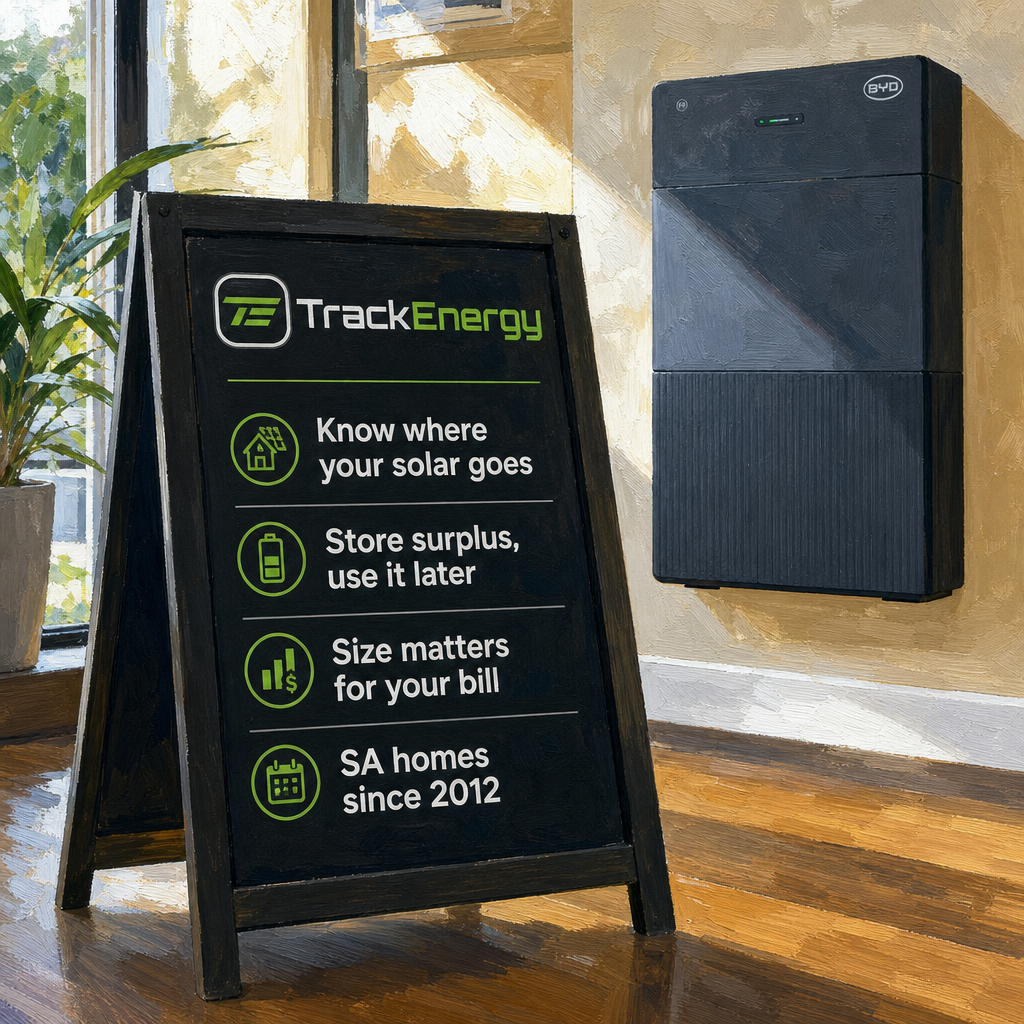
Sizing matters a great deal here. A battery that is too small relative to your solar generation will fill up quickly and you will still be exporting a lot. A battery that is oversized relative to your solar system may not charge fully each day, which means you are not getting full value from the capacity you paid for. Good system design matches battery capacity to your solar generation, your daily consumption pattern and your energy goals.
Getting the Design Right From the Start
The reason battery storage works so well for some households and feels underwhelming for others almost always comes down to design and expectation setting. A system designed around your actual usage data, roof orientation, local shading conditions and energy goals will perform very differently to a generic package put together without that groundwork.
At Track Energy, every system we design starts with understanding how you actually use energy. We have been doing this across South Australia since 2012, and that local experience matters. Adelaide Hills conditions, suburban Adelaide, regional properties, they each present their own variables. Understanding those variables is part of what makes the difference between a system that performs well for years and one that leaves you wondering what you paid for.
Whether you are looking at adding a battery to an existing solar system or starting fresh with solar and storage together, the process should always begin with the right conversation, not a brochure and a quote form.
Get a free solar quote from Track Energy. Visit trackenergy.com.au or call 0416 533 628