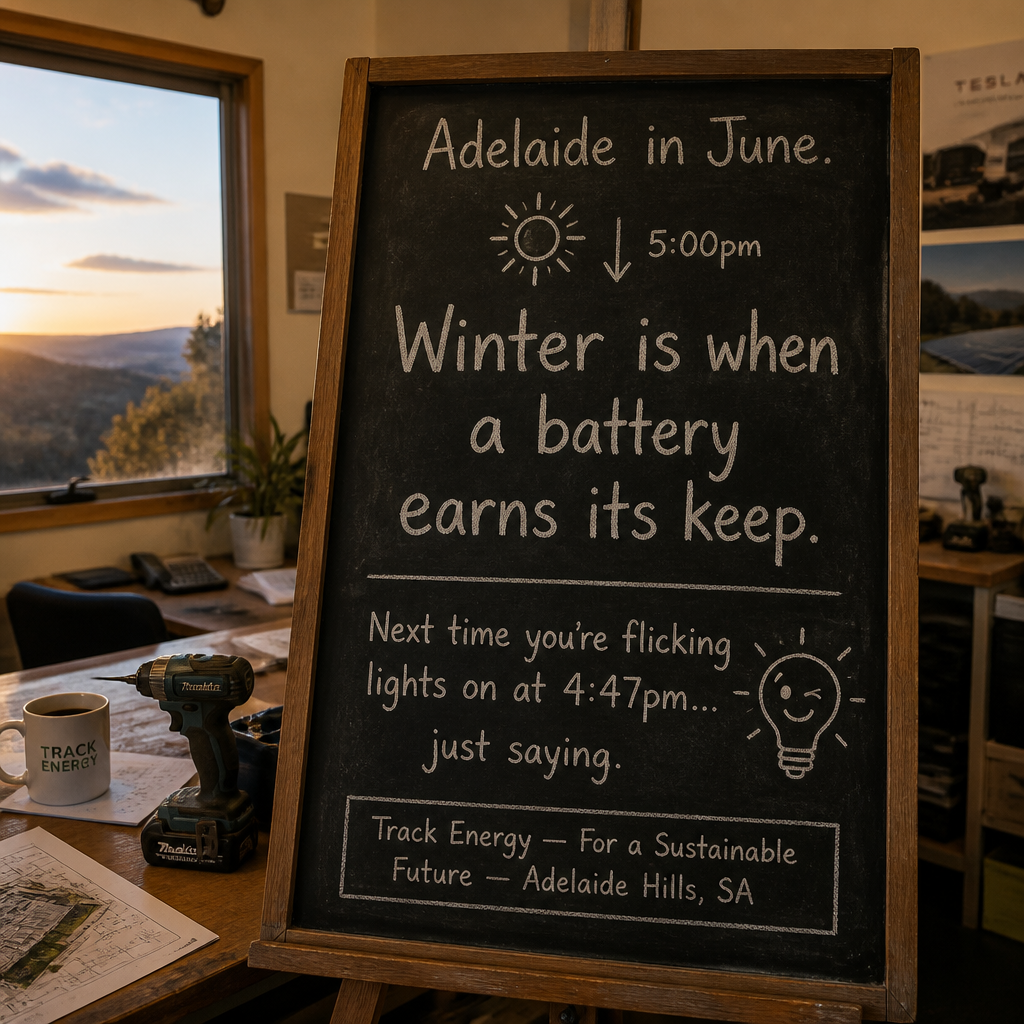
There is a particular moment in Adelaide winter that every household knows. It is around 4:45 in the afternoon. The sky is doing that flat grey thing, someone flicks the lights on, and somewhere on the other side of town a solar system quietly winds down for the day. The sun has clocked off. Your solar panels have too. And the electricity meter is about to start spinning on grid power for the next 14 or so hours.
If that sounds familiar, you are not alone. Winter in Adelaide is genuinely the season that separates a basic solar setup from a system that works for you around the clock. And that difference comes down to one thing: battery storage.
What Actually Happens to Your Solar in Winter
Solar panels do not stop working in winter. That is a common misconception worth clearing up. What changes is the amount of usable daylight and the angle of the sun. In Adelaide, June and July bring shorter days with sunrise happening well after 7am and sunset before 5:30pm. Cloud cover reduces output further on the days it rolls in.
The result is a generation window that is genuinely narrower than in summer. Your panels may still produce a solid amount of energy during the middle of the day, but that window is shorter. And the hours you need electricity most, early morning when you are getting the family ready, and evening when you are home cooking dinner and running the heater, sit almost entirely outside that generation window.
Without a battery, all that solar energy produced during the day either gets used as it is made or gets exported back to the grid for a feed in tariff. Then when evening rolls around, you are buying power back from the grid at a much higher rate than you exported it for. In winter, that gap between what you export and what you pay to import is felt much more sharply.
What a Battery Changes in the Winter Months
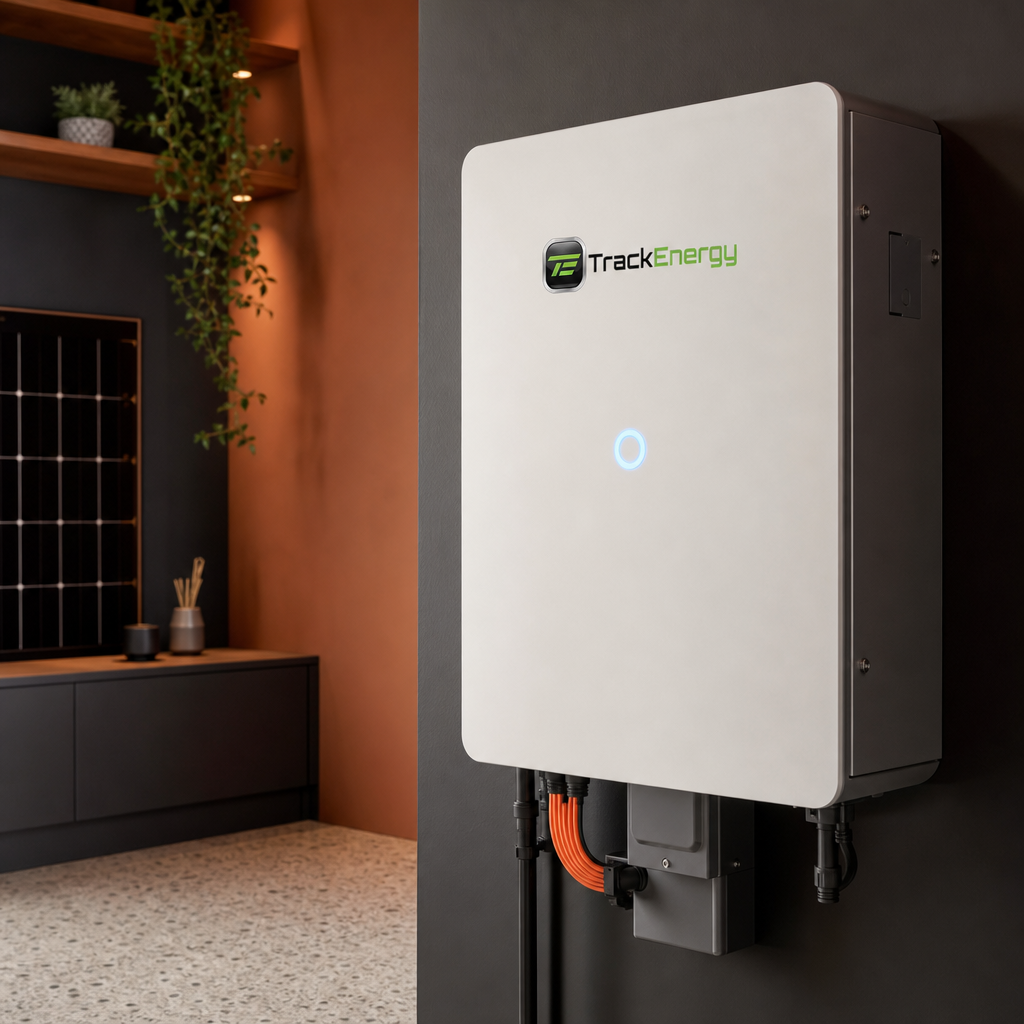
A battery changes the equation by storing the energy your panels produce during the day so you can use it after the sun goes down. Instead of exporting midday solar and then buying grid power at 6pm, you draw from your battery first.
In practical terms, this means your evening routine including the lights, the oven, the heater, the TV, the kids doing homework can run off solar energy you generated earlier in the day rather than grid power at peak rates. For many Adelaide households, this is the period where energy costs are at their highest. Evening peak pricing means every kilowatt hour you can cover from your battery rather than the grid makes a real difference.
Winter also tends to be the season when households run their highest loads. Reverse cycle air conditioning working harder to heat the home, longer hot showers, more time spent indoors with lights and appliances running. A well sized battery paired with a quality solar system gives you a genuine buffer against all of that.
The Right Size Matters More Than People Realise
One of the most common situations we see is households who have added a battery to their existing system without checking whether the solar array is sized to actually fill that battery in winter conditions. A battery is only as useful as the solar energy available to charge it. If your panels are undersized for your roof or your usage, the battery may not reach full charge on shorter winter days, which limits how much you can draw from it in the evening.
This is why getting the design right from the start matters. The panels and battery need to be sized together with your household's usage patterns in mind, including how that usage shifts across the seasons. Adelaide winter behaviour is different to summer behaviour. A well designed system accounts for both.
At Track Energy, we look at your actual consumption data before recommending a system. There is no point installing a large battery if your solar array cannot fill it in June. Equally, there is no point having a large solar array with no storage if your main usage is in the evenings. The two need to work together for the system to make sense.
Feed In Tariffs and Why They Matter Less Than They Used To
When solar first became widely adopted across South Australia, feed in tariffs were generous enough that exporting excess solar to the grid was a meaningful financial return. That is no longer the case. Feed in tariffs in South Australia have dropped considerably over the years, while retail electricity prices have moved in the opposite direction.
What that means practically is that the value of using your own solar energy has increased relative to the value of exporting it. Every kilowatt hour you store in a battery and use yourself saves you buying that unit at the full retail rate. Every kilowatt hour you export earns you the feed in tariff, which is a fraction of that retail rate.
In winter especially, when your generation window is shorter and your evening demand is higher, a battery shifts more of your solar energy from the export column to the self consumption column. That shift is where the financial benefit sits in the current pricing environment.
Is Now the Right Time to Add a Battery
Battery storage technology has matured significantly over the past several years. The products available now are more reliable, better warranted, and more competitively priced than they were even three or four years ago. The brands we install at Track Energy are ones we are confident standing behind for the long term, and that confidence comes from over 15 years of watching what performs and what does not in South Australian conditions.
If you already have solar and you are noticing your bills spike in winter despite having panels on the roof, that is a clear signal worth paying attention to. It often means your system is generating well during the day but you are still heavily reliant on the grid for your peak hours. Adding battery storage is usually the logical next step.
If you are looking at solar for the first time, designing the system with battery storage included from the outset is worth considering seriously. It is generally more cost effective to do it as a single project than to retrofit storage later.
Either way, the conversation starts with understanding your household's actual energy usage. That is where we begin with every customer.
Winter in Adelaide is a good reminder of why energy independence matters. The grid is not getting cheaper. The sun is still there, even if it does knock off a bit early in June. A well designed solar and battery system means you are ready for it.
Get a free solar quote from Track Energy. Visit trackenergy.com.au or call 0416 533 628