If your electricity bills have felt stubbornly high this winter despite having a solar system on your roof, shading is one of the first things worth looking at. Not because something is broken, but because winter in South Australia does something to sunlight that catches a lot of households off guard.
The Winter Sun Sits Much Lower Than You Think
During summer, the sun tracks high across the sky. It rises steeply, peaks well above your roofline, and sets late. Your panels get long hours of strong, relatively direct light and shading from nearby trees or structures tends to be minimal because shadows fall short and steep.
In winter, all of that changes. The sun's path flattens out significantly. It rises lower on the horizon, stays low throughout the day, and sets earlier. That low angle means shadows from trees, fences, pergolas, neighbouring structures, and even your own roof ridgeline can stretch much further across your panels than they ever do in December or January.
The result is that a tree which barely touches your roof in summer can throw a long shadow across two or three panels for a good portion of the afternoon once May rolls around. That is not a fault. It is just geometry, and it is one of the most consistent seasonal patterns we see in this region.
Why Partial Shading Has Such a Large Effect
This is where solar gets a little unintuitive. You might assume that if shade is covering one panel out of twenty, the system just loses one twentieth of its output. In most conventional string inverter setups, that is not how it works.
In a standard string system, the panels are wired together in series. When one panel in a string underperforms due to shading, it drags the output of the entire string down with it. Think of it like a lane of traffic merging onto a freeway. One slow vehicle can back up the whole flow behind it.
The degree to which this affects your system depends on how it was designed and what technology is in use. Systems with microinverters or DC optimisers on each panel are much better at managing partial shading because each panel operates more independently. Systems without that capability are more vulnerable to the domino effect.
If your system was designed and installed without a detailed shading analysis for your specific property, and without accounting for how winter sun angles affect your particular roof and surroundings, then a noticeable drop in winter generation is not always a sign of a fault. It may simply be a design consideration that was not fully addressed at the time.
How to Tell If Shading Is the Culprit
The most practical starting point is your inverter data or monitoring app. Most modern inverters keep a record of daily generation. Pull up your output from this time last year and compare it to what you are seeing now. If the drop is proportionally larger than you would expect from shorter days alone, shading is worth investigating.
Next, take a look at your roof at different times of day, particularly in the early afternoon when shading impact tends to be highest in winter. Walk around the property and look at what is casting shadows and where those shadows fall. A tree that has grown in the last couple of years, a new structure next door, or a neighbour's extension can all make a meaningful difference to winter output that was not there when your system was first commissioned.
Your monitoring data will sometimes show you which strings or panels are underperforming. If you have access to panel level data, you may be able to identify exactly which part of the array is being affected and when.
If none of this is pointing to an obvious answer, it is worth getting someone with experience to take a proper look. A quick site assessment can usually distinguish between a shading issue, a performance degradation issue, and a genuine fault fairly quickly.
What Good Shading Analysis Looks Like at the Design Stage
The homes that tend to handle winter generation best are the ones where shading was factored into the original system design, not left as an afterthought.
A properly conducted site assessment before installation will look at the sun's path across the property at multiple times of year, including the winter solstice when the solar altitude is at its lowest. It will identify which roof planes receive the best winter exposure, flag any existing or potential obstructions, and use that information to guide panel placement, string configuration, and inverter selection.
In some cases this means placing panels on a roof face that is not the obvious first choice, or using optimisers to protect certain strings from shade impact. In other cases it simply means being honest with the customer that winter output on that particular property will always be limited, and that battery storage will play an important role in getting the most out of what the system does produce.
That kind of upfront honesty is something we have always prioritised at Track Energy. It is not always what people want to hear at the time, but it saves a lot of frustration down the track.
The Role Battery Storage Plays in Winter
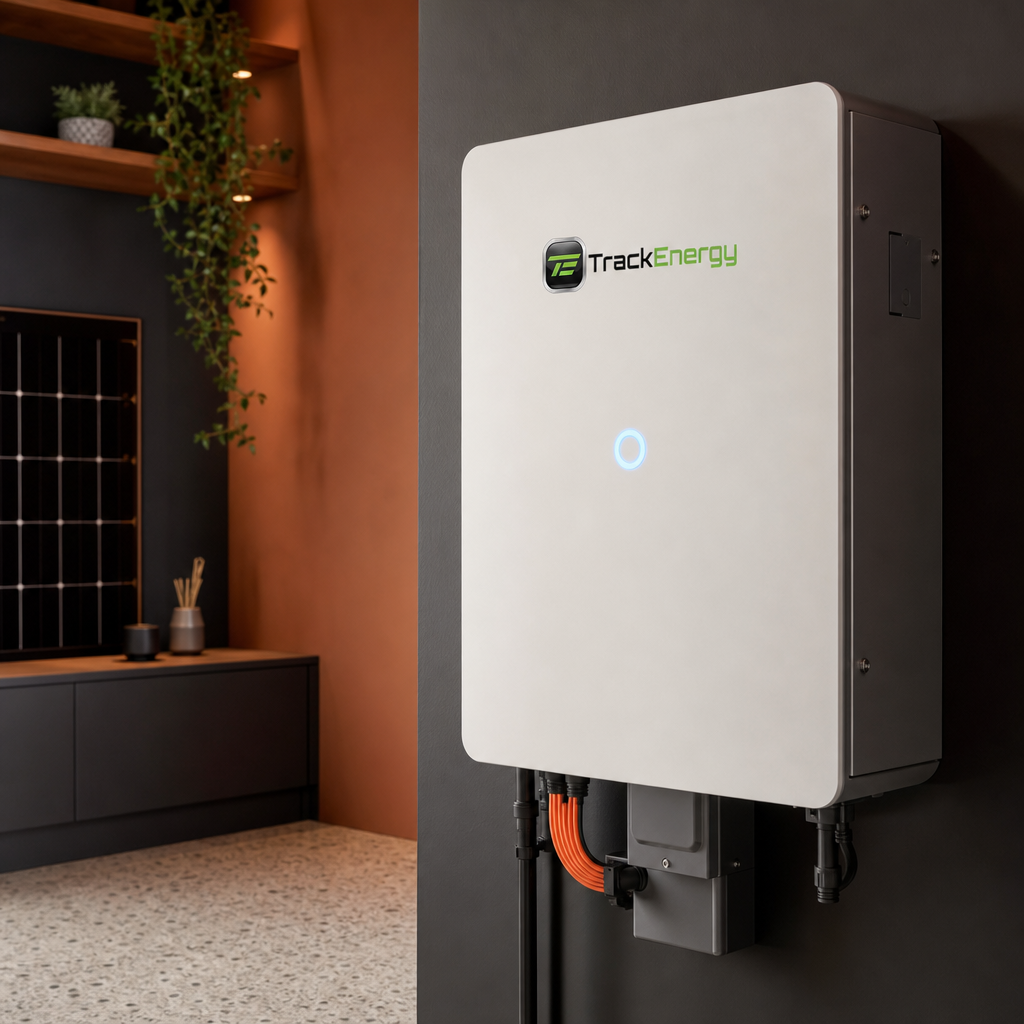
On days where generation is reduced because of shading, shorter daylight hours, or overcast skies, a well sized battery system gives households a way to make better use of whatever solar is available.
Rather than exporting surplus midday generation at a low feed in tariff rate and then buying expensive evening power back from the grid, a battery stores what your panels produce during the day and releases it when your household needs it most. In winter, when generation windows are shorter and shading may be cutting into peak output hours, this becomes especially valuable.
Battery storage does not solve a shading problem, but it does reduce the household's exposure to it. You get more value from the generation you do have, and you rely less on grid power during the evening peak when rates tend to be highest.
For homes where winter shading is a known constraint and cannot easily be resolved by trimming vegetation or repositioning panels, adding battery storage to the picture is often the most practical way to maintain strong energy independence across the whole year.
Winter in Adelaide is a good time to pay attention to how your solar system is actually performing rather than assuming everything is fine because the sun is still shining. If your bills are telling a different story to what you expected, it is worth finding out why before another winter passes. A second opinion from someone who knows the local conditions can make a real difference.
Get a free solar quote from Track Energy. Visit trackenergy.com.au or call 0416 533 628